

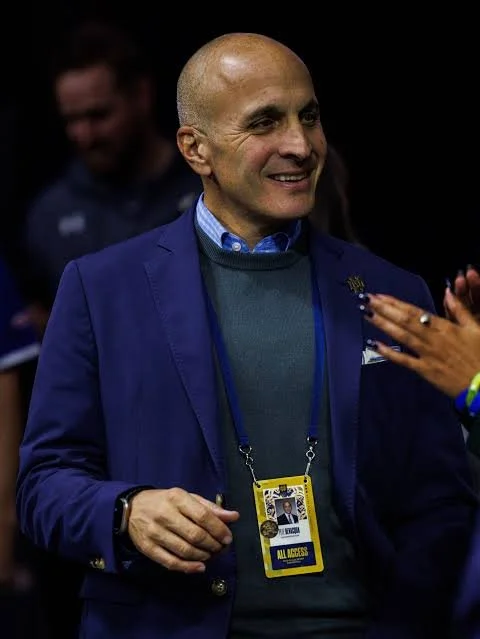
The Patch on the Sleeve: notre dame fans have been debating
For nearly a century, Notre Dame Stadium has been defined as much by what isn't there as by what is. No billboards lining the concourse. No corporate signage bolted to the scoreboard. No names on the backs of jerseys. In a sport that has otherwise been wallpapered in advertising since the 1990s, Notre Dame turned the absence of ads into its own kind of brand: a promise that some things are bigger than a sponsorship check.
That promise just got its first real test. On July 28, 2026, Notre Dame announced a six-year partnership with SoFi worth a reported $18 to $20 million per year, the largest jersey patch deal in college sports history. For the first time ever, a corporate logo, not a school crest, not an apparel brand, will appear on Fighting Irish uniforms across every sport.
The reaction from the fan base has been immediate, loud and split right down the middle.
To understand why this feels different to so many Notre Dame fans, you have to understand what the program has spent decades protecting. Notre Dame Stadium's lack of advertising isn't an accident or an oversight. It's a deliberate policy, one the university has pointed to for years as proof that Notre Dame plays by different rules than everyone else. Fans in South Bend didn't just tolerate that restraint. Many built their entire relationship with the program around it.
So when the patch was announced, the backlash wasn't really about a two-inch square of fabric. One fan summed up the sentiment on social media by joking the school could rebrand itself as "SoFightingIrishAreForSale." Sports radio host Chris "Mad Dog" Russo took a similar tone on air, arguing that this kind of move belongs to programs like Ohio State, not to a team defined by Knute Rockne, Lou Holtz and a century of mythology. The underlying complaint isn't really financial. It's existential. If Notre Dame will put a bank's logo on the jersey, what, fans are asking, is actually still off-limits?
There's also a symbolic irony that hasn't been lost on critics: Notre Dame has always resisted putting player names on the backs of jerseys, treating the program and the "Notre Dame" lettering across the chest as bigger than any individual. Now the front of that same jersey carries a financial company's name instead. To skeptics, that's not a neutral change. It's a value statement about what the university considers sacred and what it doesn't.
But plenty of Notre Dame fans, and the university itself, would argue that comparing a jersey patch to stadium advertising misunderstands what tradition Notre Dame actually promised to protect.
Notre Dame Stadium is treated as hallowed ground, and it still is. There is no in-stadium advertising, no ribbon boards flashing sponsor logos, no naming-rights deal attached to the building itself, and nothing in this agreement changes that. The university drew that line publicly and held it even while negotiating the SoFi deal, which suggests the stadium wasn't a bargaining chip at all. It was simply never on the table. The jersey patch lives in a completely different category: it's a uniform element, not a stadium fixture, and it follows a format that has become standard across almost the entire sport. Ohio State signed a similar deal with Chase the same week. Other blue bloods have already normalized the practice. In that light, Notre Dame isn't leading a race to commercialize college football. It's arriving several years late to a race that had already been run.
Viewed that way, the apparel line is arguably the one place Notre Dame could expand revenue without touching anything sacred. The stadium stays untouchable. The uniform, on the other hand, is simply a product, one that happens to be worth more right now than it has ever been. Notre Dame's national television deal, its independent status, its 39 national championships and a fan base that spans the country rather than a single region have made the Fighting Irish brand more valuable today than at almost any point in program history. A patch that would be worth a fraction as much on a regional program's jersey commands a premium on Notre Dame's precisely because the brand itself has never been cheapened. In that sense, the timing isn't a coincidence. It's Notre Dame recognizing that its uniform, not its stadium, is the asset built for this exact moment, and cashing in on it while the value is at its peak.
There's also a financial argument that's hard to dismiss. College athletics has entered an era of revenue sharing, NIL payments and rising costs across every sport, not just football. An $18 to $20 million annual infusion doesn't just pad a marketing budget. It can fund scholarships, financial literacy programs and walk-on support across all 26 of Notre Dame's varsity programs, many of which will never generate their own sponsorship revenue. Framed that way, the patch isn't a betrayal of the "student-athlete first" identity Notre Dame has always claimed. It's arguably a more efficient way to fund it.
Even some fans who dislike the patch on principle have landed here. Commentary from Notre Dame-focused outlets has noted that a small, contained logo may be an easier trade-off to accept than the alternatives: rising ticket prices, donor pressure or cuts to smaller sports that don't generate revenue on their own.
The honest answer is that both readings can be true at once, and that's exactly why the reaction has been so split.
The jersey patch does represent a real boundary crossed. Notre Dame spent decades marketing its restraint as part of its identity, and this is the first time a non-apparel corporate brand has ever appeared on a Fighting Irish uniform. Pretending that's a trivial change ignores how deliberately the university built its brand around not doing exactly this.
At the same time, the university does appear to be drawing a new, more modern line rather than erasing the old one. Stadium advertising, the more sacred and more visible tradition, remains untouched. The no-names-on-jerseys policy remains untouched. What changed is the uniform's front, in a format nearly every major program has already adopted, tied to a fund explicitly built around scholarships and athlete development rather than pure advertising revenue.
Whether that distinction holds probably depends less on financial logic and more on how the deal actually plays out. If the SoFi patch is the only visible change, and Notre Dame Stadium stays free of the in-venue advertising that defines Saturdays at most other programs, this may end up looking like a narrow, well-managed compromise rather than the start of a slide. If this is instead the first of several corporate logos that creep onto the jersey, the scoreboard, the tunnel or the field itself over the next few years, fans who are uneasy right now will have been right to worry.
For a program built on the idea that some things shouldn't be for sale, the SoFi deal isn't proof that Notre Dame has abandoned that idea. It's proof that the university found the one asset it could monetize without touching the thing it actually considers untouchable. The stadium remains hallowed ground. The jersey, at a moment when the Notre Dame brand has never been worth more, became the revenue play instead. Whether that's a reasonable modernization or the first crack in the dam is a question Notre Dame fans will likely keep arguing about for a long time, and one only the next few years of decisions will really answer.
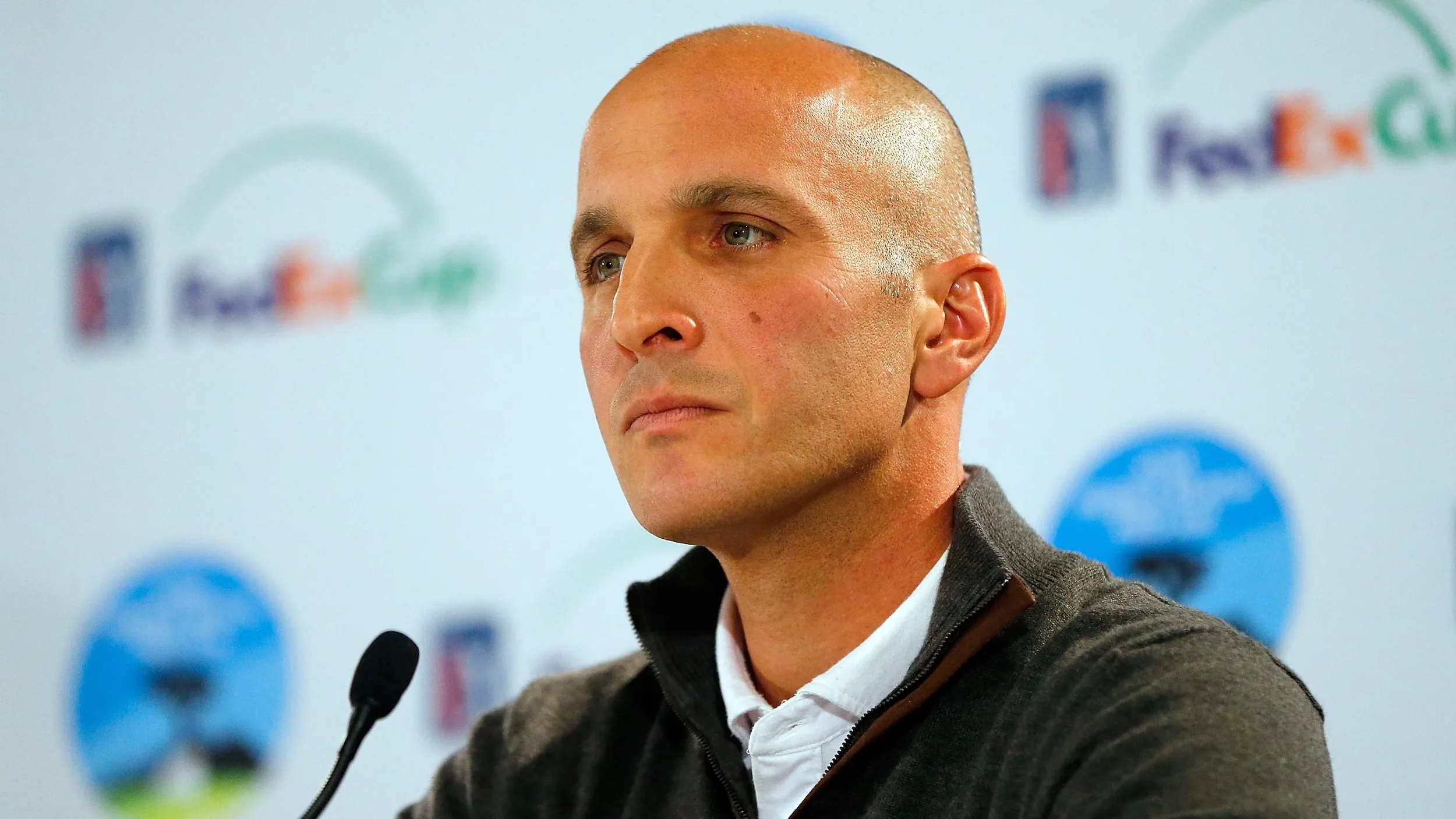
Notre Dame AD Pete Bevacqua stands with sec, big 10 for cfp expansion
The College Football Playoff expansion debate has reached a tipping point, and Notre Dame Athletic Director Pete Bevacqua has made clear exactly where the Fighting Irish stand. Bevacqua has aligned Notre Dame with the SEC, Big Ten and Big 12 in pushing for a 24-team playoff format — and in doing so, has positioned the Irish not just as a voice in the conversation, but as a program uniquely built to dominate regardless of how the playoff landscape ultimately unfolds.
Bevacqua Steps Into the Arena
The expansion conversation has been building for two offseasons now. Big Ten commissioner Tony Petitti lit the fuse last year with an aggressive push to double the current 12-team field. The Big 12 and ACC have since climbed on board, with commissioner Jim Phillips lending his voice to the chorus. Now Notre Dame has joined them, and Bevacqua's reasoning goes deeper than simply wanting more teams in the field.
"I think in this day and age with what universities are investing in football, it's a very expensive sport," Bevacqua said. "You need to give more teams hope. The way things are structured now, everything points to the CFP. It's a measure of success. It's important in the tenure of a coach. We've seen firings when teams aren't going to make it to the CFP."
Bevacqua's vision extends beyond the present moment. He's thinking about the long-term health of college football as a whole — and what happens to the sport if the financial burden of competing at the highest level becomes unsustainable for programs outside the traditional powerhouse tier.
"My concern is that if more teams aren't given hope, that universities over the course of the next five, ten years will say, 'Hey, is the investment worth it?'" Bevacqua continued. "I would hate to see a college football landscape where there's only a handful of teams that can really give it a legitimate go year after year after year."
That is the voice of a man who understands that a thriving college football ecosystem benefits Notre Dame just as much as anyone. A sport with thirty programs genuinely competing for a title is a healthier, more marketable, more financially robust product than one with eight. Bevacqua sees the big picture — and he's right to.
The Strategic Genius of Notre Dame's Position
What makes Notre Dame's embrace of the 24-team format particularly shrewd is that it comes from a position of strength, not desperation. The Fighting Irish don't need a bigger playoff to survive. They need it to thrive — and there is a significant difference.
Consider what Marcus Freeman has built in South Bend. Notre Dame is scheduling some of the most demanding non-conference slates in the country, with home-and-home series against Alabama, Texas, BYU, Florida and Auburn on the books in coming seasons. The Irish aren't soft-scheduling their way into playoff consideration — they are earning it the hard way, against the best competition available. Ohio State plays Texas out of conference. Clemson has gone back-to-back against Georgia and LSU. Notre Dame belongs in that same conversation about programs willing to put their records on the line before conference play even begins.
That scheduling philosophy means one thing clearly: Notre Dame is building a program that can compete with anybody, anywhere, at any time. In a 12-team playoff, that makes the Irish a dangerous contender. In a 24-team playoff, it makes them a program that would enter the field battle-tested and ready while other programs that padded their records against cupcakes scramble to compete with legitimate title contenders.
Notre Dame wins in either world — and Bevacqua knows it.
Aligning With Power to Shape the Future
By stepping forward alongside the SEC and Big Ten — the two most powerful conferences in college football — Bevacqua has ensured that Notre Dame has a seat at the table where the sport's future gets decided. That is not a small thing for an independent program without a conference megaphone behind it.
The SEC and Big Ten generate the lion's share of college football's revenue and carry the most weight in playoff format negotiations. Notre Dame aligning with those conferences on the 24-team push isn't just a philosophical stance — it's a political calculation that keeps the Irish relevant in conversations that will shape the sport for the next decade. An independent program that sits on the sidelines of that debate risks being shaped by decisions made without their interests in mind. Bevacqua made sure that doesn't happen.
The revenue implications are also impossible to ignore. A 24-team playoff means more games, more television inventory, more distribution money and a bigger financial pie for participating programs. Notre Dame, with its own NBC television deal and massive national brand, stands to be one of the biggest financial beneficiaries of an expanded field. More playoff games means more Notre Dame on national television — and that is always good for the bottom line in South Bend.
A Program Built to Prosper at Any Playoff Size
Perhaps the most important element of Notre Dame's position is that Freeman and Bevacqua have constructed a program that doesn't need the playoff format to change in order to compete. Under Freeman, Notre Dame has already demonstrated it can reach the College Football Playoff and make deep runs in the current 12-team format. The roster investment, the recruiting infrastructure, the coaching staff and the scheduling ambition are all pointed at one goal — winning a national championship.
If the playoff stays at 12 teams, Notre Dame's brutal non-conference schedule and elite recruiting class position them as perennial contenders for one of those coveted spots. If it expands to 24, the Irish would enter as one of the most battle-tested programs in the field — a team that has been preparing to play anyone, not just survive a soft schedule long enough to sneak into an expanded bracket.
Either way, the programs that should be concerned about the playoff format are the ones that need a bigger field just to get in. Notre Dame is not one of those programs. Bevacqua is advocating for expansion from the high ground — as the AD of a program that will be in the conversation whether the field is 12, 16 or 24 teams.
The Bottom Line
Pete Bevacqua has made a bold, calculated and strategically sound move by aligning Notre Dame with the forces pushing for a 24-team College Football Playoff. His argument for the long-term health of the sport is genuine and carries real merit. His understanding of what expansion means for Notre Dame's brand, revenue and competitive positioning shows a leader thinking well beyond the next season.
Most importantly, Marcus Freeman is building exactly the kind of program that makes this position credible. Notre Dame isn't lobbying for a bigger playoff because they need a lifeline. They're supporting expansion because they intend to be one of the programs that makes every round of a 24-team field worth watching — and they're scheduling, recruiting and competing like it every single day.
The playoff may be changing. Notre Dame is ready for all of it.
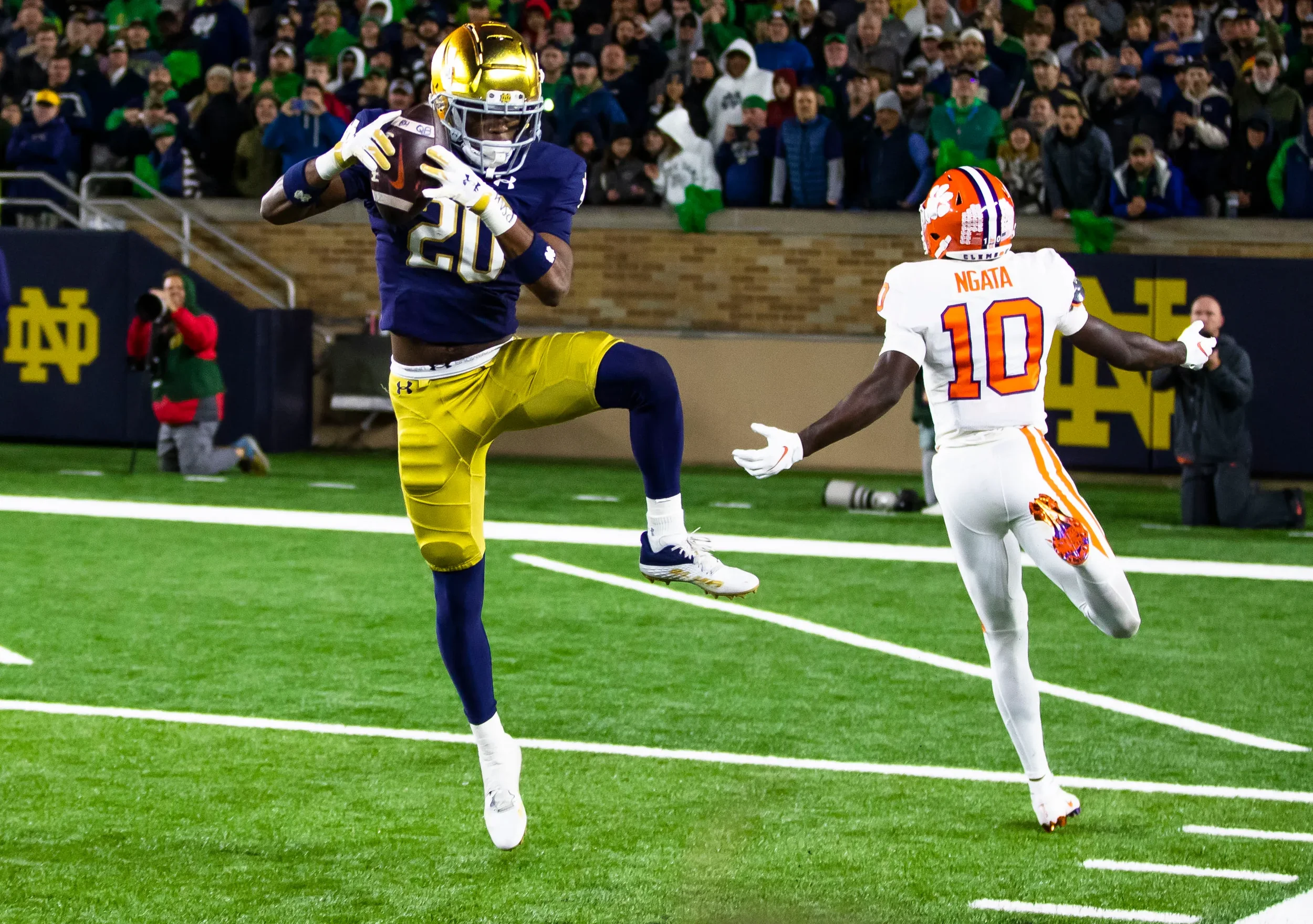
Notre dame-clemson rivalry heats up with 12-game series
Two storied programs with national success and a history of memorable matchups, Notre Dame and Clemson, have agreed to a 12-game home-and-home contract to meet on the gridiron each season between 2027 and 2038. The two schools were already scheduled to meet in 2027 (at Clemson), 2028 (at Notre Dame), 2031 (at Clemson), 2034 (at Notre Dame) and 2037 (at Clemson) per the ACC’s schedule contract with Notre Dame. The agreement marks Notre Dame’s first new series of at least 12 games the program has started since 2002.
“We strive to consistently create a football schedule that positions us for success in the College Football Playoff, and that goal requires us to form historic partnerships like this one with Clemson,” said Notre Dame Vice President and James E. Rohr Director of Athletics Pete Bevacqua. “This rivalry has already produced some of the most memorable moments in recent college football history, and our fans deserve these matchups to continue to make those indelible memories.”
The two programs have met on eight prior occasions, including twice in the postseason. One of these postseason meetings was the 2020 ACC Championship, the only time Notre Dame Football has played in a conference.
The all-time series has a 5-3 Clemson record. At least one of the teams has been ranked in the top 15 in the nation entering all eight previous meetings, and five times both teams have been ranked entering the game, including three meetings of top five teams between 2018-20. The two schools have met four times in the regular season since 2015. The schools are 2-2 in those meetings with the home team winning each.
Notre Dame and Clemson have developed a bit of a football rivalry over the last decade, and that rivalry just jumped up as the Fighting Irish and Tigers announced a new 12-year scheduling agreement.
According to ESPN, the deal will start in 2027 and go through the 2038 season. There were already four games scheduled during this period, but now the budding rivalry becomes an annual occurrence.
The series could be of great benefit to the ACC as it transitions into an era where teams get rewarded with more money for higher TV ratings. This would also help Clemson, who has been in talks with the ACC to receive a greater share of revenue as the premier program in the conference. Playing Notre Dame on an annual basis gives the Tigers more leverage in those conversations. The Irish will gain another rivalry that over time could morph into what other rivalries like Michigan, Miami, and USC have been. USC head coach Lincoln Riley has hinted at ending the ND-USC rivalry in an effort to lessen the Trojans’ strength of schedule with nine conference games in the Big Ten.
ACC Commissioner Jim Phillips says the extra Clemson games not previously scheduled will not count towards Notre Dame's five-game commitment to the ACC.
Take 2036, for example: Notre Dame had Virginia Tech, Georgia Tech, Florida State., Pitt and North Carolina rotating in as its ACC opponents. The year 2036 may be a lifetime away in college football the way things have changed recently, but it would see Notre Dame face those teams in addition to Clemson on the schedule.