

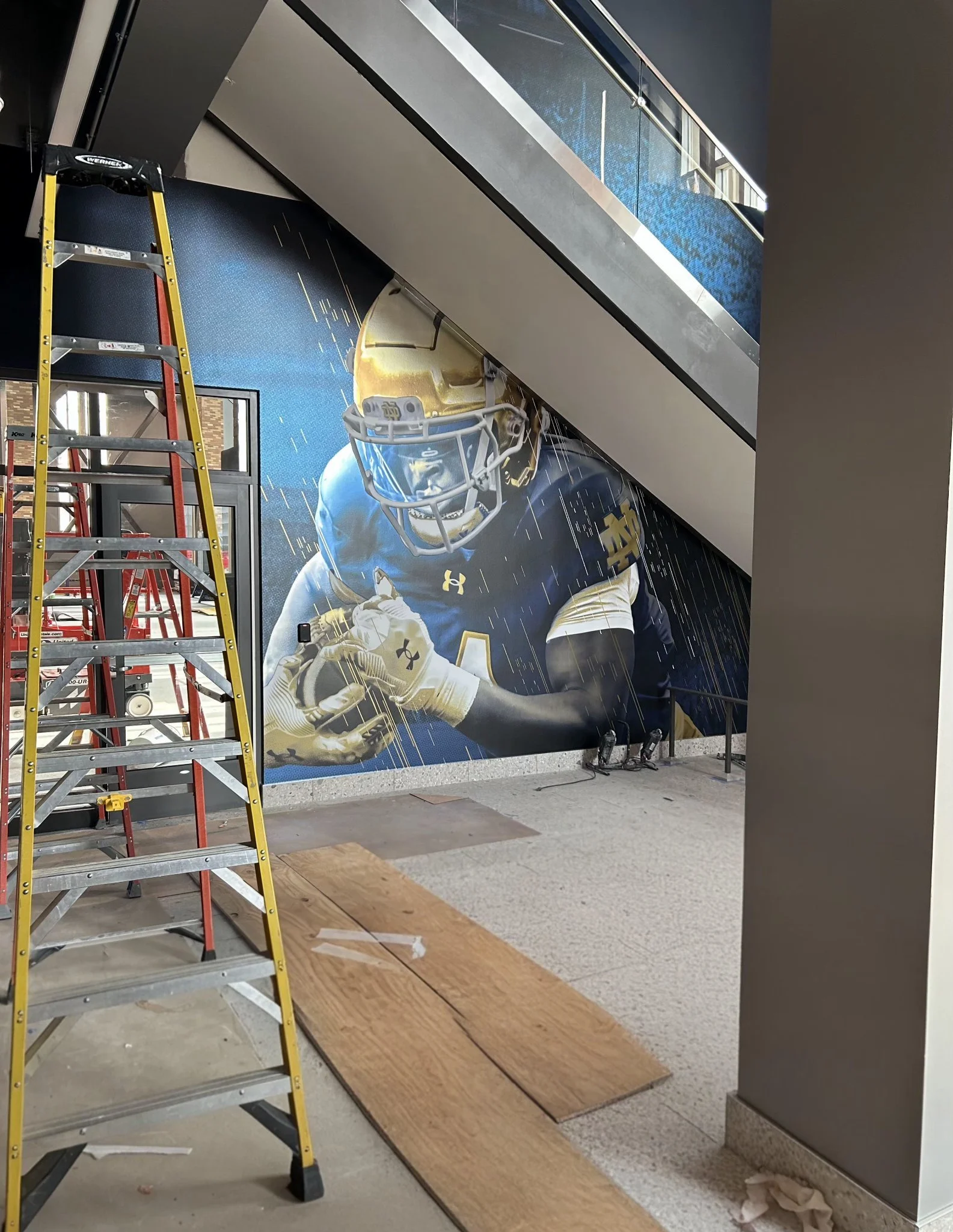
Shields Family Hall: How Notre Dame's New Football Home Reshapes the Program — On the Field and Off
When Notre Dame broke ground on the Jack and Kathy Shields Family Hall in the spring of 2024, it wasn't just another shovel-in-the-dirt photo op. It was a statement. Set to open this fall on Courtney Lane, the 150,000-square-foot facility represents a nearly 50% increase in football-dedicated space over the current Guglielmino Athletics Complex — and it arrives at a moment when facilities have become one of the clearest battlegrounds in college football's arms race.
What's Actually Inside
Shields Hall isn't just bigger locker rooms and shinier weight equipment. According to the university, the building will house advanced training and sports medicine facilities, an equipment room built around body-scanning and fabrication technology, and — maybe most notably — an on-site player nutrition area designed to let the program prepare meals directly rather than trucking them in from elsewhere on campus, as has been the case for years.
That last piece matters more than it might sound. Notre Dame athletic officials have talked about wanting the nutrition space to "foster community between teams and model healthy eating," which points to a broader philosophy: this building isn't just about building bigger, faster players. It's about building an environment players actually want to spend time in.
The project is being funded by a group of former Irish players led by ex-linebacker Jack Shields, along with fellow former players Pat Eilers and Dave Butler. That detail carries its own weight — it's not corporate money or a naming-rights deal with an outside company. It's alumni who played the game reinvesting in the infrastructure of the program that shaped them.
The On-Field Case: Closing the Facilities Gap
For years, Notre Dame's brass — including former AD Jack Swarbrick and head coach Marcus Freeman — have insisted facilities weren't the reason the program hadn't broken through to a national title. But "not the reason we're losing" and "not worth fixing" are two different things, and the athletic department has clearly decided this is a lever worth pulling.
Consider the timeline: the $400 million Crossroads renovation of Notre Dame Stadium in 2018, the Irish Athletics Center indoor practice facility in 2020, and now Shields Hall. That's a decade-plus of continuous, deliberate investment. Athletic director Pete Bevacqua has framed it directly — the goal is putting Notre Dame's infrastructure "on par with the big-hitting programs across the country, and then some."
Notably, Notre Dame officials reportedly toured Clemson's football facility before playing the Tigers, a small but telling detail — measuring yourself against the programs you're trying to beat, then building past them.
The Recruiting Angle
This is where a building starts to translate into actual roster talent. All-American cornerback Ben Morrison put it plainly at the groundbreaking ceremony: recruits notice. He spoke about how the Irish Athletics Center influenced his own decision to come to Notre Dame, closing his remarks with a simple line — facilities do matter.
That's not just a player being polite for the cameras. In modern recruiting, five-star prospects and their families are touring multiple campuses, often within days of each other, and physical impressions matter — the weight room, the nutrition setup, the sense that a program is investing in you specifically for the next four or five years. A tired, cramped, hand-me-down facility sends one message. A brand-new, purpose-built space with body-scanning tech and an in-house culinary operation sends another. Shields Hall gives Notre Dame's coaching staff a tangible, walkable answer to the "why here" question that comes up on every visit.
The Part Worth Watching: Notre Dame's Unusual Campus Culture
Here's where Notre Dame's situation is genuinely different from most of its Power Four peers, and it's worth sitting with for a second.
At a lot of major programs, football players increasingly operate in something close to a separate ecosystem — their own dorms, their own dining, their own daily orbit that barely intersects with the broader student body. Notre Dame has historically resisted that model. Its student-athletes live in the dorm system, eat in the dining halls, sit in the same classrooms, and are woven into campus life in a way that's become something of a point of pride for the university — part of the broader "student-athlete" identity Notre Dame likes to sell as central to its brand.
Shields Hall, by design, pulls more of a player's day-to-day life — training, meals, recovery, treatment — onto a self-contained football campus. That's the right move competitively. It's also a structural shift away from the integration that's long made Notre Dame's culture distinct.
None of this means Notre Dame is abandoning that identity overnight. But it's a dynamic worth monitoring as the building comes online this fall: as football life becomes more self-contained and professionalized, does the historic closeness between athletes and the broader student body hold, or does it quietly start to erode? Programs that have gone further down this road elsewhere have sometimes found that the more insulated an athletic operation becomes, the harder it gets to maintain that everyday connection to campus life — even when no one intends for that to happen.
For a program that has long branded itself as different from the professionalized model of college football, that tension between building a championship-level operation and preserving what makes Notre Dame Notre Dame is one of the more interesting subplots to watch once the doors open.
Bottom Line
Shields Hall is a clear, tangible investment in on-field performance and a legitimate recruiting weapon — the kind of facility that shows up in a highlight reel during an official visit and closes the gap with programs Notre Dame is chasing. But its bigger, quieter story might be about the second-order effects: what happens to Notre Dame's uniquely integrated culture as the football program becomes more self-contained. Worth watching once the building opens its doors this fall.